阅读以下说明和C函数,填补代码中的空缺(1)~(6),将解答填入答题纸的对应栏内。
【说明】
二叉树的宽度定义为含有结点数最多的那一层上的结点数。函数GetWidth()用于求二叉树的宽度。其思路是根据树的高度设置一个数组counter[],counter[i]存放第i层上的结点数,并按照层次顺序来遍历二叉树中的结点,在此过程中可获得每个结点的层次值,最后从counter[]中取出最大的元素就是树的宽度。
按照层次顺序遍历二叉树的实现方法是借助一个队列,按访问结点的先后顺序来记录结点,离根结点越近的结点越先进入队列,具体处理过程为:先令根结点及其层次号(为1)进入初始为空的队列,然后在队列非空的情况下,取出队头所指示的结点及其层次号,然后将该结点的左予树根结点及层次号入队列(若左子树存在),其次将该结点的右子树根结点及层次号入队列(若右子树存在),然后再取队头,重复该过程直至完成遍历。
设二叉树采用二叉链表存储,结点类型定义如下:
typedef struct BTNode {
TElemType data;
struct BTNode *left, *right;
} BTNode, *BiTree;
队列元素的类型定义如下:
typedef struct {
BTNode *ptr;
int LevelNumber;
} QElemType;
GetWidth()函数中用到的函数原型如下所述,队列的类型名为QUEUE: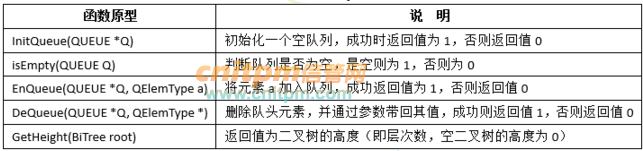
【C函数】
int GetWidth(BiTree root)
{
QUEUE Q;
QElemType a, b;
int width, height=GetHeight(root);
int i, *counter=(int *) calloc (height+1, sizeof(int));
if ( (1) ) return -1; /* 申请空间失败 */
if ( !root ) return 0; /* 空树的宽度为0 */
if ( (2) ) return -1; /* 初始化队列失败时返回 */
a.ptr=root; a.LevelNumber=1;
if (!EnQueue ( &Q, a)) return -1; /* 元素入队列操作失败时返回 */
while (!isEmpty (Q)) {
if( (3) )return-1; /* 出队列操作失败时返回*/
counter[b.LevelNumber]++; /* 对层号为b.LevelNumber的结点计数 */
if(b.ptr->left){ */ 若左子树存在,则左子树根结点及其层次号入队 */
a.ptr=b.ptr->left;
a.LevelNumber= (4) ;
if ( !EnQueue (&Q, a)) return -1;
}
if(b.ptr->right){ /* 若右子树存在,则右子树根结点及其层次号入队 */
a.ptr = b.ptr->right;
a.LeveINumber= (5) ;
if ( !EnQueue (&Q, a)) return -1;
}
}
width=counter [1] ;
for (i=1; i< height +1; i++) /* 求counter[]中的最大值 */
if ( (6) ) width=counter[i];
free(counter);
return width;
}
 查看答案
查看答案

 信管网公众号
 信管网订阅号
 收藏
收藏  考试新手指南
 学习计划攻略
 精华备考资料
 案例论文干货
 章节模拟试题
 免费试听课程
 考试信息推送